

 |
 |
 |
The Serengeti National Park
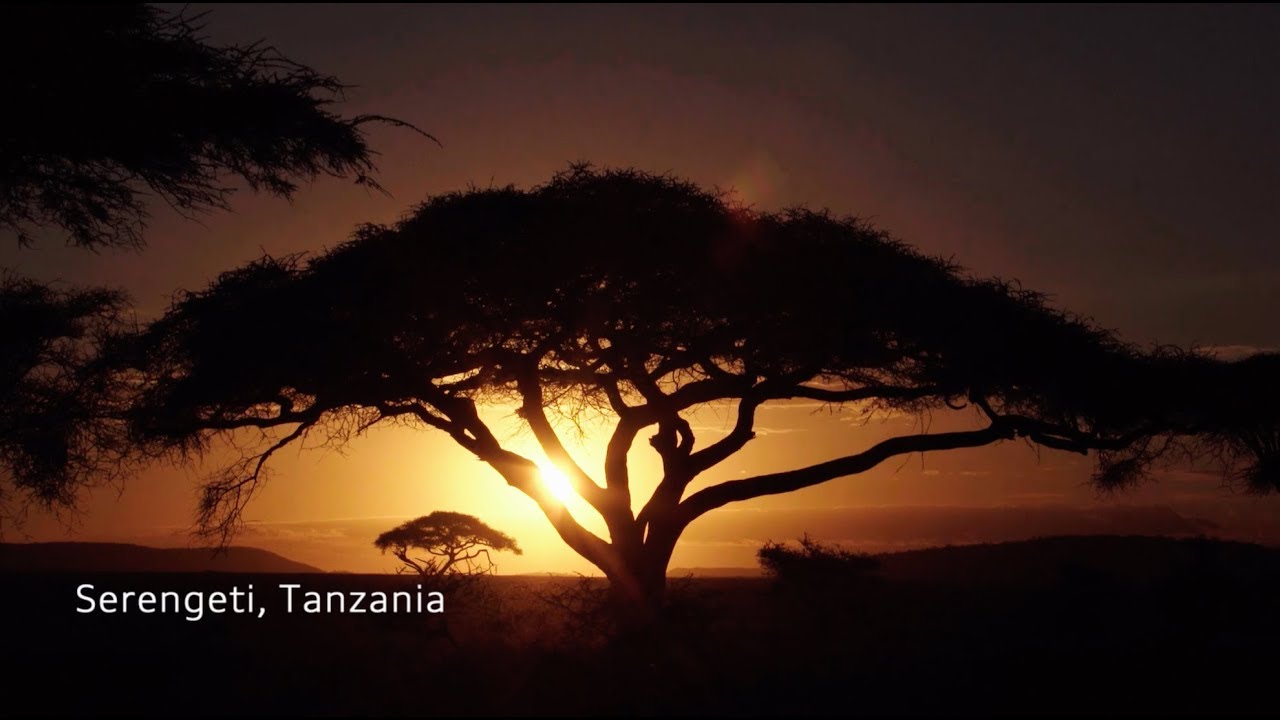
Serengeti is generally recognised as the major wildlife reserve in the world. It contains the world's largest herds of hoofed animals in the wild. The park is particularly known for the migration of about one million brindled gnus and zebras. According to the season you might get a full impression of this unique spactacle. The exact location of the main mass of the herd of gnus and zebras cannot be exactly predicted. But even if you miss the long treks of wilderbeest you can be certain of seeing a large number of non-migratory species. |
| |
Lake Lagarja/Lake Masak, South Serengeti
From December to May, depending on the rains, the large herds are concentrated on the low lying grass steppe between Olduvai, Gol, Naabi and Lagarja. A base on Lake Masak or Lake Lagarja is then ideal because one can travel from there in all directions.
Day excursions take one into areas that are little known so that you can enjoy in peace an animal paradise: for example Hidden Valley, the Soito Ngum Kopjes or the Kakesio Plains. You will enjoy the freedom of travelling cross country in order to be able to find the best places and thus have the chance to see rarer animals such as honey-badgers, wild cats, porcupines. In the right season, Southern Serengeti is not to be surpassed.
Moru Kopjes and Seronera, Central Serengeti
Here the savanna animals are joined by species that have adapted to living in the rocky cliffs. From here, or whilst in transit, you visit Seronera in the centre of the park searching for rare leopards and cheetahs. You can also enjoy the ever changing landscape with gallery forests, kopjes and water holes.
Lobo, North Serengeti
The North Serengeti is very different from the grassy plains in the South. As there is always water present the big herds retreat there in the dry season. In addition there are many species that live here permanently and you will also fairly regularly see elephants. A world for itself are the Bologonja Springs on the border to Kenya.
The 'Corridor', West Serengeti
This is a special area which is seldom offered on safari tours. Long distances, poor communications (few vehicles are equipped with a radio) and the frequently difficult road conditions still keep away most visitors from this part of the Serengeti which stretches almost as far as Lake Victoria. An important aspect of the Serengeti is therefore lost to them.
This area is very different from the other main zones of the park. In the dry season large stretches of the route westward can be practically empty of animals. The last quarter of the route is however ideally suited to be the home for thousands of animals the whole year round. Gnus and zebras who are resident here do not join their migratory relatives who pass through every year on their way northwards.
Big herds of giraffes, buffalo, eland, topis, kongonis, impalas, waterbuck and Thompson's gazelles live here together with them. All the big cats and hyenas are present in a good number as well.
A special attraction, that has become quite famous, is the crocodile population of the Grumeti River. This is particularly large at Kirawira, where the river does not dry up. The time spent at this life-giving water source can be among the most inter-esting. Here there are not only crocodiles and hippos to observe but also a large number of varieties of birds. Those tourists with a lot of time (or luck) will be able to discover the Black and White Colobus monkey in the crowns of the trees.
On the wooded savannahs of the Ndabaka plains there is always something to see. You will always feel at peace at the calm pools and mysterious "korongos".
During your excursions in this least visited part of Serengeti, you can stay at the most luxurious and exclusive camp near Kirawira, the "Kirawira Serena Camp", at Conservation Corporation's "Grumeti River Camp" (also very exclusive!) or at the cheaper, but good and charming new Speke Bay Lodge right on the shore of Lake Victoria (4 km outside the park, an hour's drive from Kirawira). |
top |
 |
 |
Outside Serengeti
But there are other fascinating National Parks and protected areas to explore. On Safari in Northern Tanzania you might want to combine serveral of the country's natural wonders in one unforgettable trip. You might even consider extending your trip to Tanzania's cost visiting the Islands of Zanzibar or Mafia where you can continue your safari experience exploring the fabulous underwater world of the Indian Ocean.
When travelling in Northern Tanzania you can visit the following National Parks on your way to Serengeti:
 |
| |
Arusha National Park
If the small Arusha National Park belonged to a country specialising in tourism one would have to queue at the entrance gate. Here, however, one is able to use some unplanned hours to step into an almost untouched world.
The forests at the foot of Mount Meru have not remained unscathed during the recent years and one cannot expect to find rhinos anymore, but many smaller or less endangered species find a home within the park borders. It is an area that one really should explore on foot.
The most important stops during a visit are the Ngurdoto Crater and the Momella Lakes. In between these are idyllic places in forest clearings and pools where it is rewarding and enjoyable to linger. If the weather is favourable, the mountains of Kilimanjaro and Meru provide a spectacular backdrop. Here also one can see the small duiker antelopes and the rare black and white colobus monkey, seldom seen elsewhere.
Tarangire National Park
The Tarangire park, with its own special character, is ideal at the beginning or at the end of a Serengeti safari. Here it is possible to undertake extensive game drives without the feeling that all it needs to complete the impression of being in normal, everyday traffic is one or two traffic lights!
The area is well worth visiting. A stay during the dry months from July to October is particularly rewarding. At this time, many animals stay close to the Tarangire River. Here one really sees groups of animals that are part of ones picture of the real Africa.
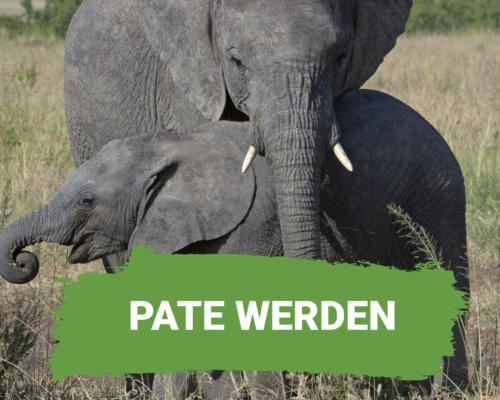
Elephants! What was common a few years ago in almost every East African protected area but is now more rare and therefore special, are encounters with elephants. At times Tarangire is home to very large herds that move across from the adjoining "Masai Mara Steppe". Even if one has to keep a respectful distance from the grey giants, as they may have had bad experiences with vehicles, these are scenes that will remain engraved in your memory.
It is clear that a park with such a variety of scenery and so rich in plants, particularly the phenomenal baobab trees, is also a paradise for birds. To observe them all in a short time is not possible, but a Flycatcher vehicle will not pass without taking note of, for example, a red and yellow barbet, a little bee-eater or a lilac-breasted roller.
On the tours that we take from the lodges or from our own camps, we always are alert for the specialities of the park including the common waterbuck, the klipspringer and the rock pythons. Recently we have frequently encountered that shy but most sought after of the cats, the leopard in his wonderful coat. There can be no better habitat for the leopard than here. When one makes longer game drives across the ancient steppes of Tarangire one can meet animals that are not normally seen on the northern route, for example the oryx antelope and the even rarer lesser kudu.
Lake Manyara National Park
This park is relatively small, but the landscapes are very varied; the ground water forest at the entrance to the protected area, the freshwater flow to the lake which shelters a stationary population of hippos and one of the most varied populations of birds in East Africa are to be found here. One can linger for hours, field glasses in hand, and always make new discoveries in the broad fertile marshlands that belong only to the animals.
At small streams and clearings in the accacia woods, in the interior of the park, there are a variety of mammals and birds, the most plentiful being elephants, buffalos and giraffes. The animals of Manyara are not particularly shy and behave very naturally. It is also rewarding to take the time to observe one of the numerous baboon colonies which are always good entertainment.
It is of course interesting to find the famous tree-climbing lions but as it can take a long time it is often not worth the search. At all times, Manyara offers many special rewards for the nature lover; whether it is a fish eagle that can almost be touched, a bushbuck crossing a clearing or a monitor lizard enjoying a meal of termites.
Ngorongoro Crater Conservation Area
The 'Eighth Wonder of the World' is a further highlight of a safari in northern Tanzania. The crater and its surroundings are a conservation area that adjoins the Serengeti. Wild animals enjoy the same protection as in a national park.
The 160 square kilometres at the floor of the extinct volcano are world famous because such a large part of the African fauna is represented here within a relatively small area. Most of the animals are quite used to visitors and vehicles, and therefore don't flee far, making it easier to observe and photograph them here than elsewhere. The number of animals does not vary much from season to season. The amount of food for both herbivores and carnivores is so abundant that it can support large numbers of each species and something exciting is always happening. Interesting species to observe are lions, hyenas and jackals. Always try to make the most of the early mornings and late afternoons to look for animals.
As the crater is so easily reached (in fact there are day excursions from Arusha) and as the large number of animals make it so attractive, this naturally means that there are more visitors. At certain times of the day and year you will, therefore, meet numerous other vehicles.
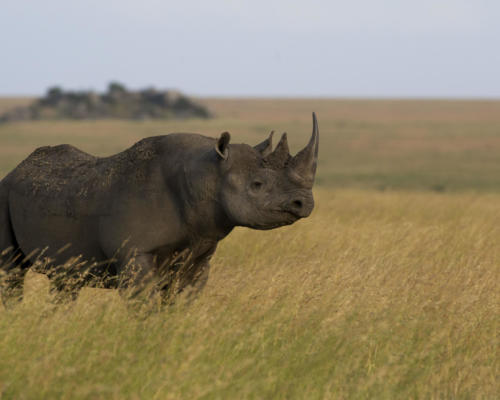
One additional and important reason for making the descent into the Ngorongoro crater is to see the African black rhinoceros - a few brave survivors of the continent's most endangered species.
On your way down from the crater to the Serengeti plains you will pass Olduvai Gorge, the "Cradle of Mankind" where the Leakey's made their famous excavations. Stop for a visit at the small but highly interesting museum.
Tourist attractions around the Serengeti National Park
The Mwalimu Julius K. Nyerere Memorial Museum
This memorial museum was officially opened in July 1999 in Butiama village, about 100 km from Seronera. The museum portrays the historical perspective of Mwalimu Nyerere, the father of our Nation.
It exhibits an interesting collection of various personal items used by Nyerere, his books and gifts presented to him when he stepped out as a President.
Historical sites
There are several historical sites near Serengeti that can be visited by tourists when arranged in advance. These historical sites include Fort Ikoma, Nyigoti, Maburi and Mara where German troops resided during colonisation in the 19th century.
Lake Victoria
One can easily visit lake Victoria which is the third largest fresh water lake in the world. Several water sports ranging from water skiing, wave running, sport fishing to nocturnal crocodile, hippo and sunrise viewing can be conducted using modern speed boats. |
| |
|
 |